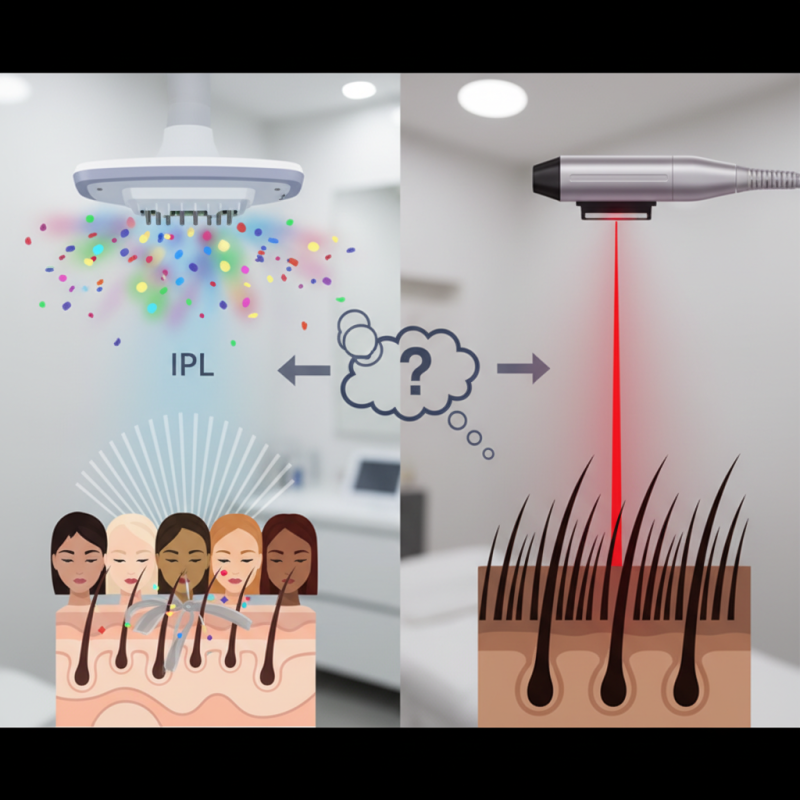
When considering hair removal treatments, many people ask, "what is the difference between IPL and diode laser?" Both methods have gained popularity for their effectiveness. Understanding their key differences is essential for making an informed choice.
IPL, or Intense Pulsed Light, uses a broad spectrum of light. It targets various skin types and hair colors. In contrast, diode laser technology emits a single wavelength of light. This precision makes diode lasers highly effective for specific hair types and skin tones.
Choosing between these methods requires careful thought. IPL may cause more discomfort for some users. On the other hand, diode laser treatments might take longer to cover the same area. It's important to consult an experienced professional to decide which option suits your skin and hair best. In the end, understanding these differences empowers individuals to choose the right hair removal solution for their unique needs.
Understanding IPL Technology and Its Applications
Intense Pulsed Light (IPL) technology is widely used in cosmetic and medical applications. This innovative approach utilizes broad-spectrum light to treat various skin concerns. It targets pigmentation, vascular lesions, and hair removal with effectiveness. Patients often experience lasting results with minimal downtime after procedures. The versatility of IPL makes it popular in dermatology clinics and spas.
IPL technology works by emitting multiple wavelengths of light. This allows it to penetrate different skin layers. The energy is absorbed by the targeted areas. For instance, it can effectively reduce redness and dark spots. IPL treatments can also stimulate collagen production, improving skin texture and firmness. Many users report visible improvements after a few sessions, with continued benefits over time.
However, IPL isn't flawless. Not all skin types respond equally well to treatment. Some patients may encounter discomfort during sessions. This variability can lead to unexpected outcomes, requiring tailored approaches. Practitioners must evaluate each patient's skin type and concerns. Understanding these nuances is crucial for achieving the best results. Comprehensive knowledge and experience in IPL are vital for effective application.
Exploring Diode Laser Technology: Principles and Uses
Diode laser technology has transformed various fields, especially in aesthetics and medical treatments. It operates on principles that focus light energy into precise wavelengths, enabling targeted treatments. This technology effectively addresses issues like hair removal and skin rejuvenation. Unlike some other methods, diode lasers minimize damage to surrounding tissues, ensuring a comfortable experience.
When considering diode lasers, it’s crucial to understand their unique advantages. They provide quicker and more efficient treatments than traditional options. The energy emitted penetrates deeply, encouraging better results. Patients often report satisfaction due to faster healing times and reduced side effects.
Tips: Always consult a qualified practitioner before undergoing treatments. Researching different technologies can enhance your understanding. Being informed empowers your choices and helps you prepare for what to expect. Remember, every person's skin is unique; results may vary.
Key Differences Between IPL and Diode Laser Technology
This bar chart illustrates the key differences between IPL and Diode Laser treatments across five critical dimensions: Treatment Speed, Pain Level, Skin Type Suitability, Cost, and Effectiveness. The values represented on the chart are on a scale from 1 to 10, highlighting the comparative advantages of each technology.
Comparative Efficacy: IPL vs. Diode Laser
When considering hair removal, the efficacy of treatments varies. Intense Pulsed Light (IPL) and Diode Laser are two popular choices. IPL treatments utilize a broad spectrum of light, targeting multiple hair follicles simultaneously. A 2022 study noted that IPL achieves an average hair reduction rate of 70% after multiple sessions. In contrast, Diode Laser uses a concentrated beam of light, which penetrates deeper into the skin. This targeted approach often leads to a higher and more consistent hair reduction rate of up to 90%.
The difference in technology also impacts the experience of clients. IPL can cause more discomfort due to the scattering of light, which may affect surrounding tissues. Meanwhile, the Diode Laser is designed to minimize pain, making it more comfortable for many patients. However, individual experiences may still vary. Factors like hair type and skin tone play significant roles in treatment outcomes. Reports indicate that Diode Lasers tend to provide better results for coarse hair, while IPL might be less effective on finer hair.
There's an ongoing debate regarding treatment sessions. Diode Laser often requires fewer sessions to achieve desired results, potentially making it more cost-effective over time. On the other hand, IPL treatments may often lead to varying results due to their broad-spectrum nature. Continuous research is essential to evaluate long-term efficacy and safety. Both methods have advantages and limitations, making it crucial for clients to consult with professionals to determine the best option for their needs.
IPL vs Diode Laser 5 Key Differences You Must Know
| Feature |
IPL (Intense Pulsed Light) |
Diode Laser |
| Technology |
Broad spectrum light |
Single wavelength laser |
| Hair Removal Efficacy |
Less effective on coarse hair |
Highly effective on all hair types |
| Treatment Duration |
Longer sessions required |
Shorter sessions with faster results |
| Skin Type Suitability |
Best for lighter skin tones |
Effective on all skin types |
| Pain Level |
May cause discomfort |
Generally less painful |
Safety and Side Effects: IPL vs. Diode Laser
When comparing IPL and diode laser treatments, safety and side effects are crucial factors to consider. Intense Pulsed Light (IPL) uses broad-spectrum light, while diode lasers use a focused beam of light. This fundamental difference in technology can lead to varying side effects. IPL can cause redness and swelling due to its scattered light. In contrast, diode lasers tend to be more targeted, often resulting in less skin irritation.
Both treatments can have temporary effects. IPL may produce a mild burning sensation, sometimes lasting minutes after treatment. Users often report a bit more discomfort with diode lasers, although it's typically short-lived. It's essential to discuss these possibilities with a qualified practitioner. Treatments should be personalized based on skin type and specific needs.
Post-treatment care is equally important. Proper cooling methods can enhance comfort after both procedures. Patients may need to avoid sun exposure for a short period. Listening to your body and reporting any unusual reactions is vital. While both options are generally safe, prioritizing safety will lead to better outcomes.
Cost Analysis: IPL Treatments vs. Diode Laser Treatments
When considering aesthetic treatments, cost is a significant factor.
IPL and diode laser therapies vary widely in price.
IPL typically has lower upfront costs, making it attractive for many individuals.
A session might range from $100 to $300, depending on the area treated.
However, multiple treatments are often necessary for optimal results, potentially adding up over time.
In contrast, diode laser treatments are generally more expensive per session, often ranging from
$300 to $600. The higher cost reflects the technology's precision and effectiveness.
Fewer sessions are typically needed. Patients may find that the initial investment leads to longer-lasting results, thus reducing overall treatment frequency.
Despite these insights, it's essential to reflect on personal goals and
budget. The decision isn't just about immediate expenses.
Long-term effectiveness and skin type compatibility also play crucial roles.
Consulting with a qualified professional can provide valuable, tailored advice on what treatment is best suited for individual needs.
FAQS
: IPL technology treats various skin concerns like pigmentation and vascular lesions. It’s also effective for hair removal.
IPL emits multiple wavelengths of light, penetrating different skin layers. This energy is absorbed by targeted areas.
Patients often see lasting results. However, some may require touch-up sessions to maintain effectiveness over time.
No, not all skin types react equally. Some may experience discomfort, leading to variable outcomes that need tailored approaches.
Diode lasers use precise wavelengths focused on deeper skin layers. They often lead to higher hair reduction rates and comfort.
Yes, diode lasers provide quicker treatments and often result in faster healing times with fewer side effects.
Comfort can vary. IPL may cause more discomfort due to light scattering, while diode lasers aim to minimize pain.
Diode laser typically requires fewer sessions for desired results. IPL may require more due to its broader spectrum nature.
Diode lasers tend to perform better on coarse hair, while IPL might be less effective on finer hair types.
Consulting ensures you receive tailored advice based on skin type and concerns. Being informed prepares you for expected outcomes.
Conclusion
The article "IPL vs Diode Laser: 5 Key Differences You Must Know" delves into the fundamental distinctions between Intense Pulsed Light (IPL) and diode laser technologies. It begins by explaining IPL's broad spectrum of light, which is effective for various skin conditions and hair removal, highlighting its versatility and applications. In contrast, the diode laser is characterized by its focused light beam, primarily used for hair removal and certain skin treatments, known for its precision and deeper penetration.
A comparative analysis of efficacy reveals that while IPL may offer more extensive treatment options, diode lasers tend to provide faster, more efficient results for targeted issues. Additionally, the article addresses safety and side effects associated with each technology, noting that both have specific risks depending on individual skin types and treatment conditions. Finally, it conducts a cost analysis comparing the financial implications of IPL treatments versus diode laser treatments, giving readers a comprehensive understanding of what is the difference between IPL and diode laser.
 Lyens Beauty